Prismacolor Premier is the colored pencil that most artists start with — and many professionals never leave. The waxy, buttery core blends like nothing else at this price point, and the 150-color range covers almost every hue a colorist could want.
But Prismacolor is also one of those supplies that rewards understanding. There are things about how these pencils work — and how to work *with* them — that aren't obvious from the packaging, and knowing them will completely change your results.
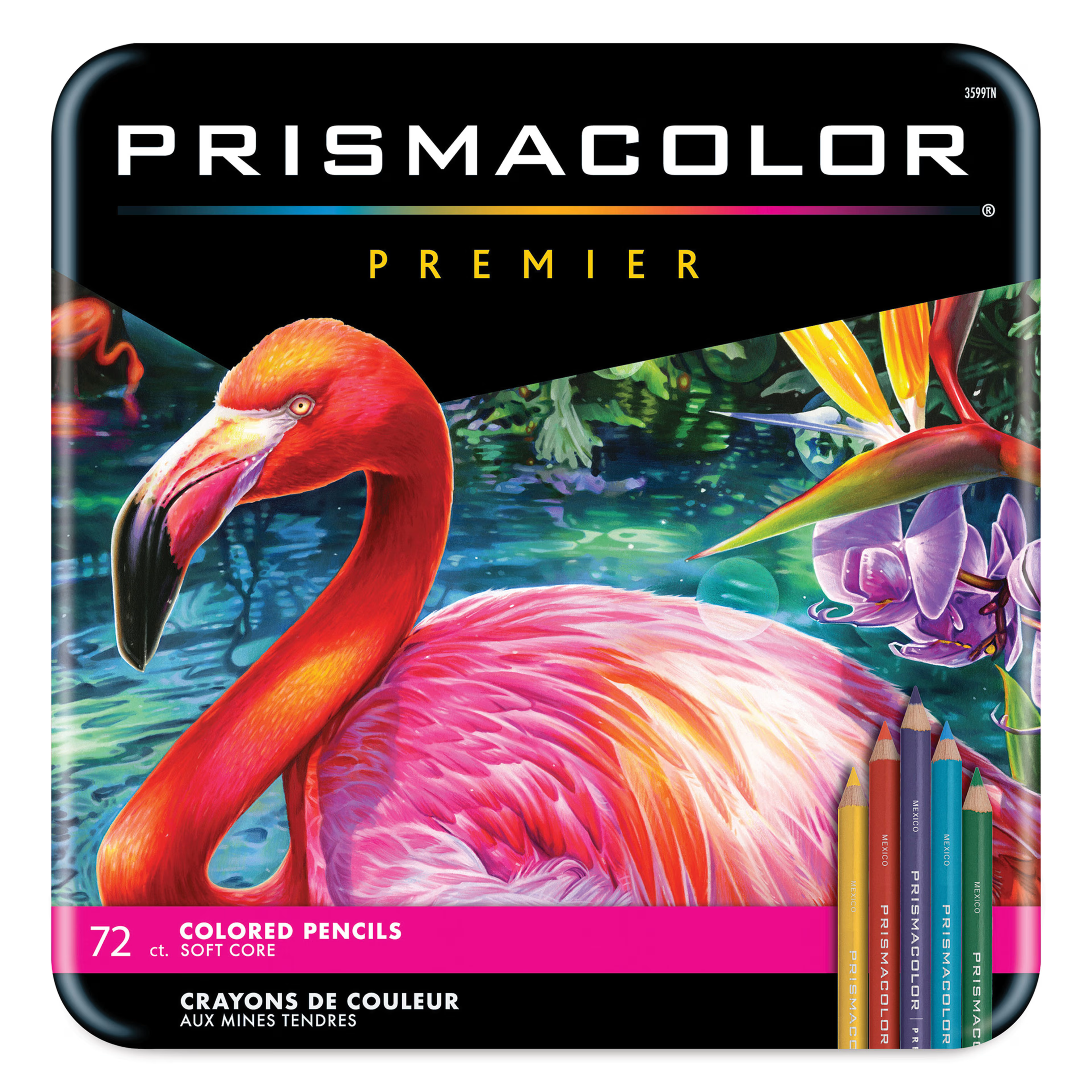
Prismacolor Premier Soft core pencils offer vibrant, pigmented colors that blend smoothly and easily.
What Makes Prismacolor Premier Different
Prismacolor uses a wax-based core — one of the softest and most pigmented in the colored pencil world at the student-to-mid-range price point. That soft core is what makes them so easy to blend and layer.
It's also what gives them their one well-known weakness: wax bloom. After heavy layering, a faint white haze can appear on the surface as the wax migrates. It's easily fixed — a soft cloth or a light coat of fixative wipes it away — but it's worth knowing it happens.
The other key characteristic: Prismacolor Premier pencils are not lightfast. Many colors will fade with significant light exposure over years. For artwork you're planning to sell, frame, or archive long-term, a lightfast pencil like Faber-Castell Polychromos or Caran d'Ache Luminance is a better choice. For coloring books, studies, and artwork you'll photograph and share, Prismacolor is perfectly fine — and dramatically more enjoyable to use.
How the PC Numbering System Works
Prismacolor uses a "PC" prefix followed by a number. Here's the honest explanation of the numbering: there isn't much logic to it. PC901 is Indigo Blue, PC935 is Black, PC938 is White. The numbers roughly reflect when each color was added to the line over the decades, not any spectral order.
The practical takeaway: you can't guess what a PC number looks like without a reference. Always look up unfamiliar codes, or use a tool like MyKindofColor to match specific colors to your existing set without memorizing numbers.
The Full Range: How 150 Colors Are Organized
The Prismacolor Premier 150-piece set covers:
Reds, pinks, and corals — from pale blush (PC928) to deep crimson (PC924). Excellent range for florals, skin tones, and sunsets.
Oranges and yellows — warm and punchy. Mineral Orange (PC1033) and Canary Yellow (PC916) are among the most-used colors in the whole range.
Greens — good variety from sage (PC1098 Artichoke) through vivid grass greens to deep forest. The yellow-greens are particularly strong.
Blues and blue-violets — the Prismacolor blue range is lovely. True Blue (PC903), Ultramarine (PC902), and Indigo Blue (PC901) form a classic triad for skies and water.
Earth tones — generous coverage in warm and cool browns, making Prismacolor one of the best pencil choices for realistic hair, wood, and animals.
Neutrals and grays — French Gray series (10%, 30%, 50%, 70%, 90%) is one of Prismacolor's best features. Five perfectly graduated warm grays that blend seamlessly for shadows in realistic work.
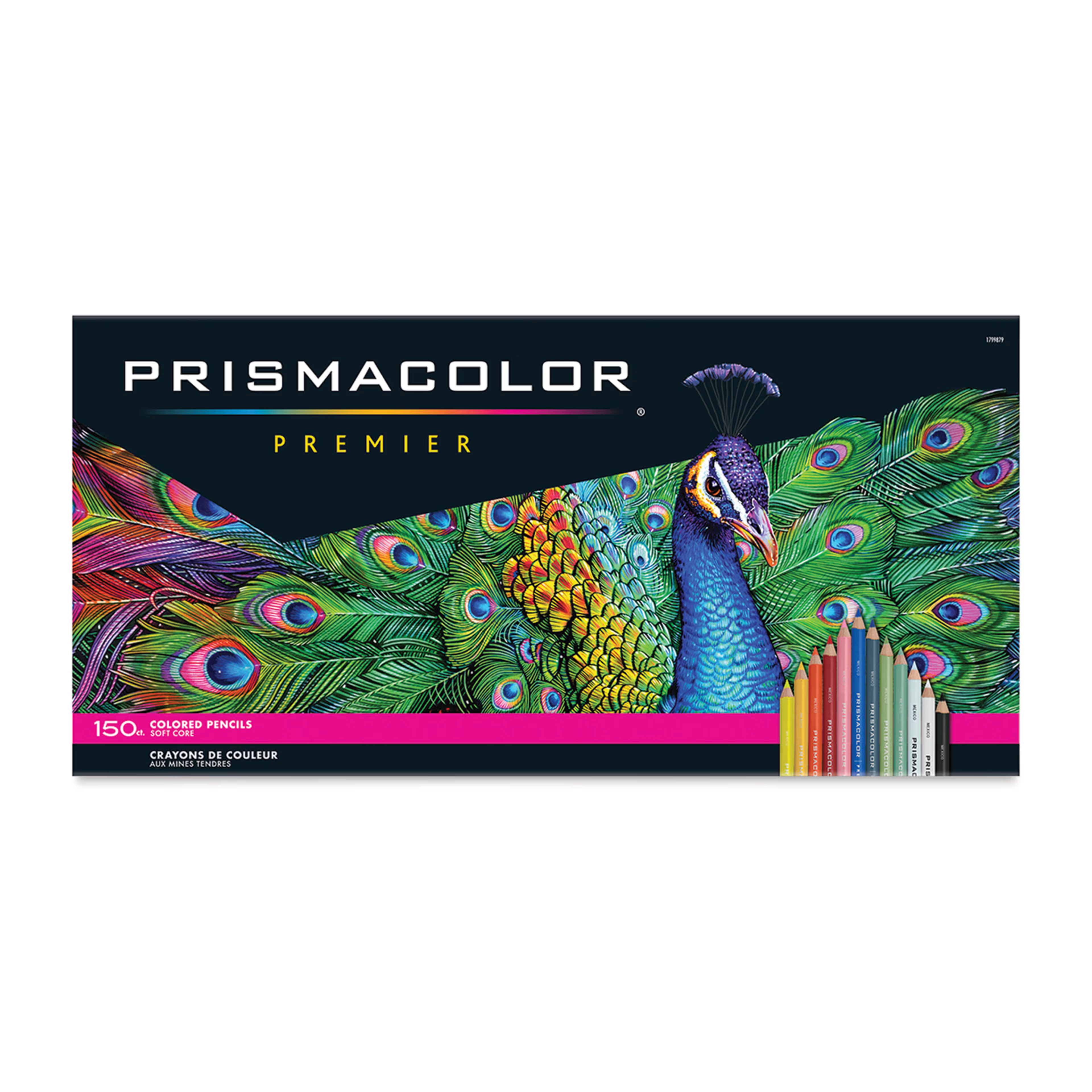
The Prismacolor Premier Soft Core set of 150 color pencils offers an expansive range of vibrant, pigmented colors that blend smoothly and easily.
Which Set Should You Buy?
12-piece: A sampler. Nice for gifting or testing the feel, but not a working set.
48-piece: A genuinely functional set. Covers the major hue families with room to blend. Good starting point.
72-piece: The sweet spot for most hobbyists. Enough range to handle almost any subject, with some redundancy that helps blending.
132-piece: Adds more skin tone options and some specialty colors (metallics, a few fluorescents). Worth it if you do portraits.
150-piece: The full range. Includes everything — plus a colorless blender, an eraser, and a pencil sharpener. If you're committed to Prismacolor, this is the set to get. The price per pencil is lower than buying individually.
The Blending Techniques That Actually Work
Burnishing: Layer your colors at medium pressure, then go over the whole area with the colorless blender (PC1077) or a white pencil (PC938) at heavy pressure. This merges the layers into a smooth, almost paint-like finish. Best for small areas and highlight effects.
Layering light to dark: Always start light, then build up. Going dark first fills the paper tooth and makes it impossible to add lighter colors on top without heavy pressure.
Solvent blending: A tiny amount of odorless mineral spirits on a cotton swab, applied over layered Prismacolor, melts the wax and creates a buttery smooth base. Let it dry fully before adding more layers on top.
The French Gray gradient: For any gray shadow area, try layering French Gray 10% → 30% → 50% → 70% in a gradient. The result looks like a professionally airbrushed shadow — and it takes about three minutes.
Finding Prismacolor Matches for Any Color
Following a tutorial that uses Faber-Castell or Copic? Want to know which Prismacolor pencil comes closest to a specific color in your reference photo?
Upload your image or enter any hex code at MyKindofColor and filter by Prismacolor Premier. You'll get the PC number, the color name, and a match quality rating — so you're never guessing which pencil to reach for.
Shop Prismacolor Premier on Amazon →
Find your Prismacolor matches →
---
Prismacolor Premier set (all 150 colors) is fully indexed in MyKindofColor. Match any photo or hex code to the exact PC number in seconds.